
How to reduce fuel consumption: visibility, optimization through GPS, and fuel level sensors
Rising fuel prices directly affect the profitability of companies that operate vehicle fleets. Efficient fuel management starts with two essential directions: full visibility over consumption and continuous optimization of how fuel is used.
Here are 6 ways you can reduce fuel costs:
1.1 Consumption visibility: the foundation of any optimization
The first step is not reducing consumption, but understanding it. Without real data, every decision is based on estimates. One of the biggest sources of hidden costs is not the consumption itself, but the losses. Through monitoring, situations such as incorrect refueling, differences between declared and actual quantities, or sudden drops in fuel level that may indicate theft can be quickly identified.
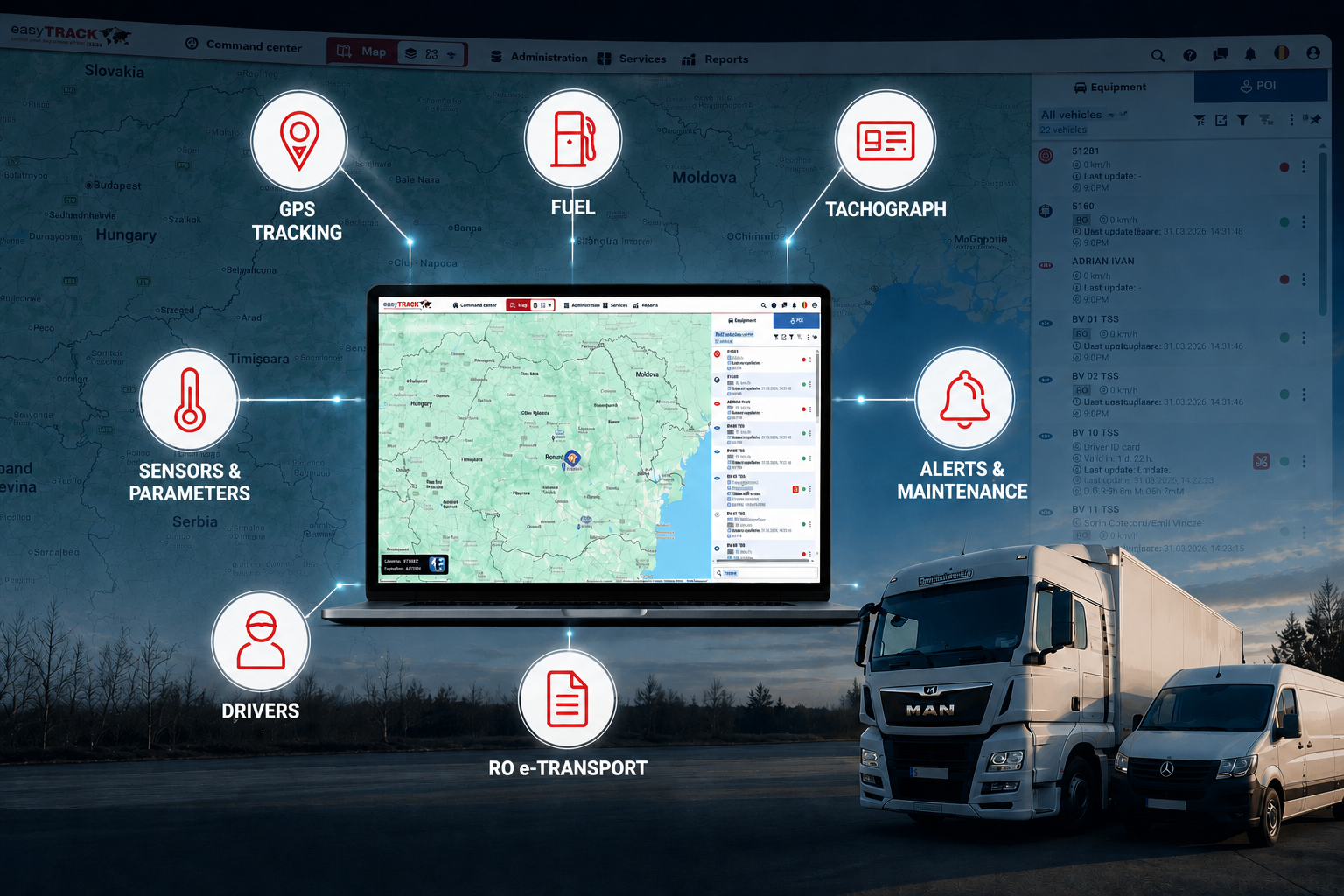
By using GPS monitoring systems together with fuel level sensors installed in the tank, every liter of fuel becomes measurable and verifiable. You gain access to accurate information about fuel levels, their variations, and the full refueling history.
The refueling reports from the easyTRACK fleet management platform by Tell Security Systems highlight every event: date, exact location, and fuel level change. For example, increases such as 11 → 60 liters or 19 → 60 liters confirm real refueling and remove any doubt about the quantity added to the tank. Correlating location data with fuel levels allows validation of every refueling and eliminates unauthorized use.
1.2 Accurate data through fuel sensor installation
The fuel level sensor is the key element that makes the difference between estimation and reality. Installed directly in the tank, it continuously measures fuel levels and sends accurate data to the fleet management application. An important advantage is that these sensors are manufactured in Brașov, ensuring adaptation to local conditions and a high level of reliability. They provide high precision in fuel measurement, eliminating variations or errors specific to indirect methods.
In addition, they are designed for long-term use, being resistant to harsh operating conditions such as vibrations, temperature changes, and intensive usage.
By correlating sensor data with GPS position, each refueling can be checked in detail: where it took place, how much fuel was added, and whether there are any discrepancies.
1.3 Optimizing driving behavior
After gaining visibility, the next step is optimization. One of the most important factors is driver behavior. Sudden acceleration, aggressive braking, and excessive speed can increase fuel consumption by up to 30–40%, especially in urban traffic. On the other hand, a smooth and consistent driving style, with gradual acceleration and traffic anticipation, significantly reduces fuel consumption and vehicle wear.
GPS monitoring allows identification of these patterns and correction through clear and objective feedback.
1.4 Reducing idle time
An engine running while stationary consumes fuel without generating value. Through the fleet management application, idle periods, frequent locations where they occur, and drivers responsible for unnecessary consumption can be identified. Reducing idle time is one of the fastest ways to save fuel.
1.5 Efficient route planning
GPS does not only provide location, but also enables route optimization. Routes with less traffic, fewer stops, and a steady driving flow directly contribute to reducing fuel consumption. In many cases, the optimal route is not the shortest one, but the most fuel-efficient. Applying these principles across the entire fleet generates significant savings over time.
1.6 Linking consumption with vehicle maintenance
Fuel consumption data can quickly indicate technical issues. A vehicle that consumes more than normal may have faults or require maintenance. Low tire pressure, engine problems, or component wear can increase consumption without being immediately visible. Early identification of these situations reduces costs and prevents major issues.
Reducing fuel consumption does not require radical changes, but visibility, control, and operational discipline.
By using GPS monitoring and fuel level sensors, every liter of fuel can be tracked, verified, and optimized. In the end, the difference is made by the ability to turn data into action: eliminating losses, correcting behaviors, and continuously optimizing operations.
Tell Security Systems offers complete monitoring solutions:
- GPS tracking
- fleet management application
- integration with precise and durable fuel level sensors manufactured in Brașov
👉 Contact us to find out how you can reduce costs and increase the efficiency of your fleet.