
TollRo After the First Week: What Transport Operators Need to Know
TollRo has applied since 1 October 2026. The system launched with malfunctions, and fines have been suspended only for those who could not pay because of the platform. The payment obligation remains in force.
In our article of 23 September, the question was whether the deadline would be kept. It was. The question now is a different one: what actually works, who is at risk of fines, and what a transport company needs to do in the coming period.
The Launch: The Platform Crashed in the First Hours
On 7 September, CNAIR had requested that TollRo be postponed until 1 April 2027, arguing that the system was not ready. The company later announced that testing had been completed and that the platform could be used from 1 October.
The system went live on 1 October at 00:00. Shortly after midnight, the platform crashed under the volume of users, transactions and automated e-mails. Problems arose with account confirmation and card payment processing.
According to CNAIR, the platform recorded approximately four million visits in the first 12 hours. Around 50,000 users and 170,000 vehicles were registered in the system. The interim Minister of Transport, Radu Miruță, reported more than 1,000 complaints from transport operators by midday on the first day.
On the evening of 1 October, CNAIR announced that the main problems had been fixed: capacity expanded, confirmation e-mails unblocked and card payments stabilised. The contractor estimated full stabilisation within 72 hours at most.
Transport operators, however, reported other problems as well. The Federation of Romanian Transport Operators (FORT) noted that communication with the RAR and DGPCI systems, map data, traffic restrictions and payments were still being worked on. Protests took place in Alba, Sibiu and Arad.
Fines: Suspended Only for Those Who Tried to Pay
On 1 October, Minister Radu Miruță signed an order, published in the Official Gazette: TollRo users cannot be sanctioned if they are unable to fulfil their obligations because of malfunctions in the application. CNAIR, in turn, announced that it would not apply sanctions until the technical problems are fixed.
The measure is not a general exemption. It protects those who were unable to create an account, enrol their vehicle or purchase TollRo because of platform errors.
What still applies:
- The payment obligation remains. TollRo must be paid as soon as the system allows it.
- Affected trips will be regularised. According to CNAIR, the corresponding toll will be determined later, based on the available data, at no additional cost.
- Complaints matter. Problems are reported through the TollRo platform, together with the registration numbers of the affected vehicles.
- Notification before a fine. According to CNAIR, vehicles caught by cameras first receive a notification, and the transport operator has 72 hours to pay the amount due.
In short: anyone who did not try to pay is not protected by the minister’s order.
What Transport Operators Are Asking For
Transport organisations are not contesting the payment of TollRo, but the fines applied for system errors.
| Organisation | Request |
| UNTRR and COTAR | Postponement of sanctions until 31 March 2027, through a law passed by Parliament |
| FORT / IMM România | A sanction-free period at least until 14 October, when the 4 weeks of piloting that began on 16 September come to an end |
| COTAR | The application to be fixed by 5 October, after which it would decide on further action |
| ACDBR | Acceptance of the GPS providers already used by transport operators, including those that transmit data to RO e-Transport, as data sources for TollRo |
The last proposal is relevant for companies with their own fleets. Many of them already have GPS equipment installed and transmit data to ANAF through RO e-Transport. For now, this is only a proposal, not a decision.
Automatic Payment: Still 15 January 2027
At present, TollRo can be paid in two ways: through a route ticket, paid in advance for a declared route, or through the TollRo mobile application, which records the route and pays from the electronic wallet.
Automatic payment through an on-board unit (OBE/OBU), via authorised SETRE providers, is not available. On-board units and European EETS interoperability are scheduled for 15 January 2027.
For a fleet, this means either route tickets declared for each trip, or a phone with the TollRo application for each driver. The recommendation from our previous article still stands: carefully check any commercial offer of “automatic TollRo payment” before signing.
What a Transport Company Can Do Now
- Create the account and enrol your vehicles on etoll.ro or in the TollRo application, without waiting for full stabilisation. Protection from fines applies to those who tried.
- Document every error: screenshot, date, time and registration number. Submit the complaint through the TollRo platform.
- Keep an accurate record of kilometres for each vehicle and each trip. For trips affected by errors, TollRo will be determined later, based on the available data.
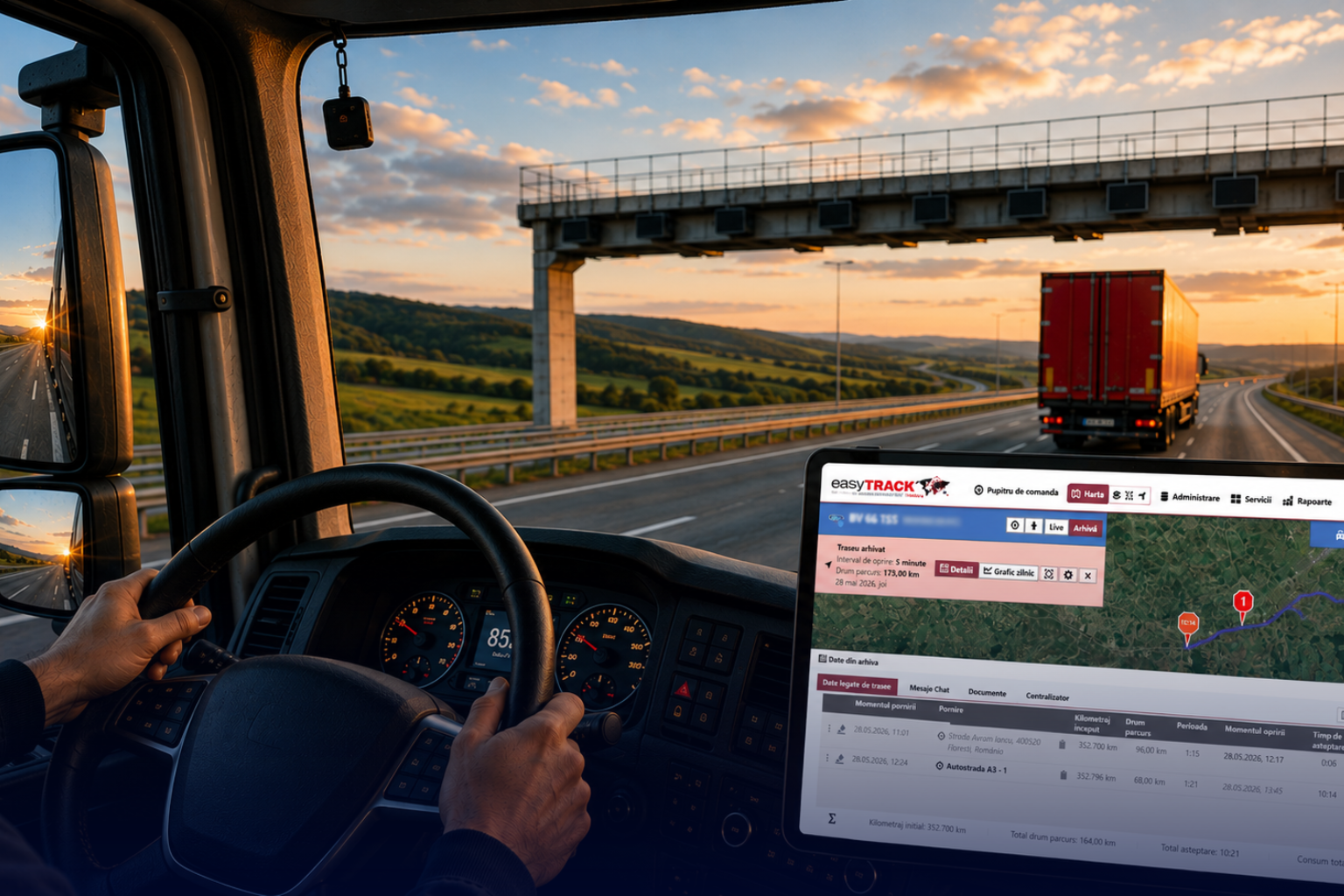
- Track the routes travelled. Keeping a clear record of routes and distances can be useful for verifying the data for each trip.
- Check any “automatic payment” offers. Until 15 January 2027, payment through an on-board unit is not available.
- Follow announcements from CNAIR and the Ministry of Transport. The 14 October date, marking the end of piloting, and any amendments passed by Parliament may change the fines regime.
Sources
- Official TollRo portal – etoll.ro
- CNAIR: what has been fixed and what comes next – Alba24
- The minister’s order on fines – Euronews
- First-12-hours figures and the minister’s order – Economica.net / AGERPRES
- No sanctions for those blocked by errors, but the toll remains – trans.info
- The notification and the 72-hour deadline – Mobilissimo
- The FORT / IMM România request – StartupCafe
- ACDBR’s proposals – StartupCafe
- COTAR’s position and the protests – Spotmedia
- The OBU and EETS timeline – trans.info