Monitoring or Improvisation: What Does Each Choice Cost?
There are two ways to manage a fleet. The first relies on data: every vehicle is monitored, documents are tracked automatically, and fuel consumption and vehicle activity are analyzed in real time. The second relies on manual checks, spreadsheets, and assumptions.
At first glance, the difference may seem to be nothing more than the investment in a monitoring system. In reality, the difference becomes visible in day-to-day operating costs. Costs do not disappear. They become hidden. They appear as higher-than-expected fuel expenses, fines for expired documents, hours spent manually reconciling data from multiple systems, and sometimes even fuel theft that goes unnoticed until it is too late.
This article is not about the features of a GPS tracking system. It is about what actually happens within a fleet when data is not centralized and automatically correlated.
1. Fuel: Where Do the Liters Go?
Fuel is typically the largest variable operating cost for any fleet. It is also the area where losses are the hardest to detect without accurate data.
Some common scenarios include:
- One vehicle consumes 10–15% more fuel than the fleet average. Without correlating fuel consumption with routes and driving behavior, this difference may remain unnoticed for months.
- A reported refueling does not match the actual fuel level in the tank. Without a fuel level sensor that accurately records fuel level changes, the discrepancy cannot be verified.
- The engine idles for extended periods at construction sites or while waiting. Idle fuel consumption is calculated separately from driving consumption. Without making this distinction, the overall figures may appear perfectly normal.
Higher fuel consumption can have many different causes: excessive idling, inefficient routes, aggressive driving, or even mechanical issues. Without correlating these data points, every situation looks the same when viewed only through fuel receipts.
In a fleet of 20 vehicles, an average loss of just 5 liters per vehicle per day amounts to 100 liters every day. At current diesel prices, this can exceed EUR 25,000 per year, without ever appearing in a standard report.
2. Expired Documents: Avoidable Fines
Expired technical inspections, lapsed liability insurance, or overdue maintenance are common situations when fleet documents are managed through manually updated spreadsheets—or worse, from memory.
The consequences are immediate:
- fines for operating a vehicle with an expired technical inspection, ranging from RON 1,305 to RON 2,900 per incident, along with the suspension of the vehicle registration certificate;
- uninsured damages in the event of an accident caused by an expired liability insurance policy;
- vehicle immobilization during inspections, resulting in towing costs, delivery delays, and operational disruption.
All of these situations can be prevented through automatic alerts configured 30, 60, or even 90 days before document expiration, directly linked to each vehicle within the fleet management platform.
3. RO e-Transport: The Risk of Incomplete Transmissions
For companies operating shipments monitored through Romania’s RO e-Transport system, incomplete or interrupted GPS transmissions may result in significant penalties. Under current legislation, failure to comply with reporting requirements may be sanctioned with fines ranging from RON 10,000 to RON 50,000.
The risk increases when:
- the vehicle’s GPS device loses signal without generating a real-time alert;
- transmissions are monitored manually, meaning issues are discovered only after the reporting deadline has passed;
- the status of each UIT code is checked individually instead of being monitored centrally.
Automatic monitoring of transmission status and immediate GPS interruption alerts transform a compliance risk into a controlled operational process.
4. Uncorrelated Data: The Cost of Lost Time
Beyond direct financial losses, there is another cost that affects daily operations: the time fleet managers spend manually reconciling information from different systems.
A common scenario: you want to understand why a truck’s fuel consumption increased this month. You must manually compare GPS routes, fuel sensor reports, tachograph data, driving behavior, and engine operating hours from different applications. The process takes hours. And in many cases, the analysis is never completed.
In many companies, information about the same vehicle is scattered across GPS software, tachograph systems, fuel reports, and Excel spreadsheets. Every analysis requires manually searching, comparing, and validating information. The real cost is not only the time spent, but also delayed operational decisions.
| Hidden Cost | Estimated Impact |
|---|---|
| Undetected abnormal fuel consumption (20-vehicle fleet) | Over EUR 25,000/year |
| Expired technical inspection fine | RON 1,305–2,900 |
| RO e-Transport fine (incomplete transmission) | RON 10,000–50,000 |
| Time spent manually reconciling data | 3–5 hours/week |
| Undetected overdue maintenance (engine damage) | EUR 5,000–15,000 |
The estimates above are indicative and may vary depending on fleet type, operating conditions, and the frequency of such events.
What Changes with an Integrated Fleet Monitoring System?
An integrated fleet monitoring system does not eliminate every operational risk. It makes risks visible while there is still time to act. The difference between monitoring and improvisation is not simply technology. It is the ability to identify problems before they generate unnecessary costs.
In practice, this means:
- automatically correlating each vehicle’s fuel consumption with its route, driving style, and engine operating hours;
- configurable alerts for expiring documents 30, 60, or 90 days in advance;
- real-time monitoring of RO e-Transport transmissions with immediate alerts when GPS communication is interrupted;
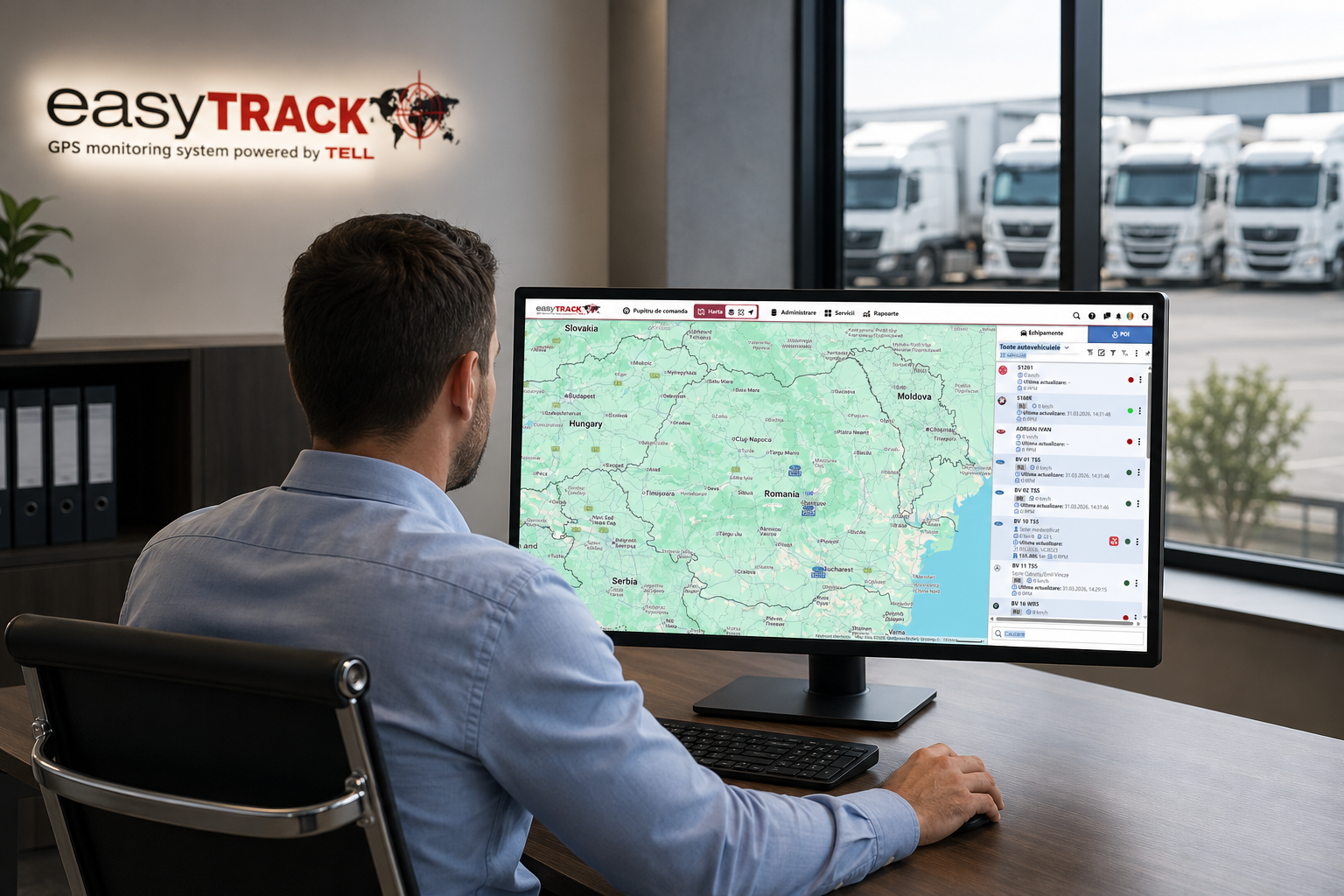
- all fleet information available on a single screen, without manual reconciliation or multiple disconnected systems.
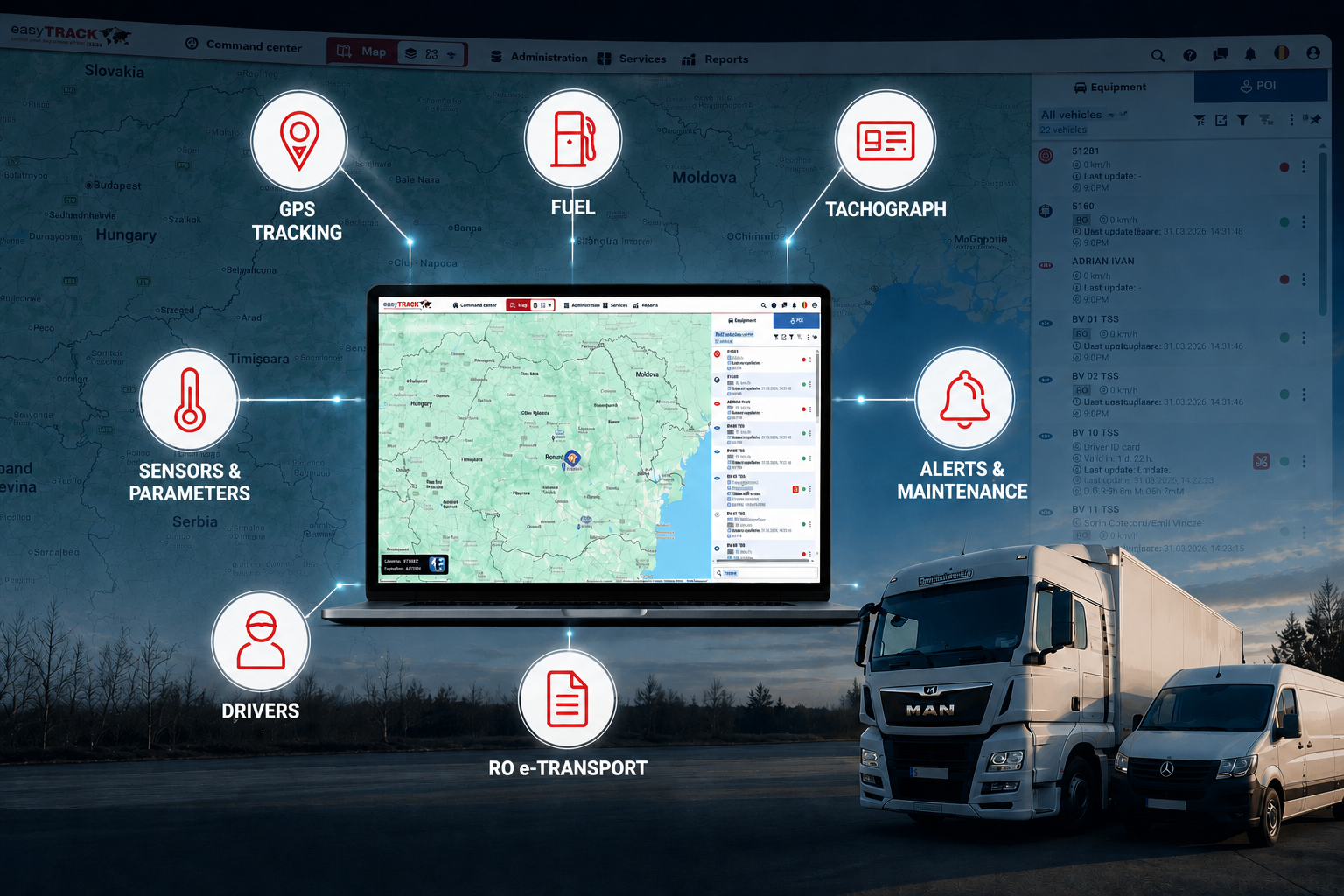
easyTRACK, the fleet management platform developed by Tell Security Systems, brings together GPS tracking, fuel monitoring, tachograph data, sensors, vehicle documentation, and RO e-Transport integration within a single platform. Data is collected automatically from the equipment installed in each vehicle and correlated without manual input.
Fleet monitoring does not eliminate every operating cost. It eliminates improvisation. And when every decision is based on data rather than assumptions, the difference becomes visible in both operational efficiency and long-term costs.
Schedule an easyTRACK presentation and discover how you can turn fleet data into faster decisions, lower costs, and greater operational control.
More information and live demonstration:
+40 (743) 119 286
www.tellromania.ro
TELL Security Systems SRL – Brașov, Romania
Monitor Fuel Senzor – Romanian Manufacturer | ISO 9001 | ISO 14001 | ISO 45001 | ISO 27001