
TollRo 2026: A Guide for Transport Operators
TollRo 2026: A Complete Guide for Transport Operators. What You Need to Know About Romania’s New Road Toll System
Starting 1 October 2026, Romania’s road charging system for commercial vehicles will change. For trucks and other freight vehicles with a Maximum Authorised Mass (MAM) exceeding 3.5 tonnes, the current road vignette (rovinieta) will be replaced by TollRo, a distance-based road charging system.
For transport operators, this change represents much more than a new payment method. Operating costs will depend on the number of kilometres travelled, the vehicle category, and its emission class. As a result, fleet management will require closer monitoring of routes and vehicle activity.
In this guide, we explain:
- What TollRo is;
- When it comes into force;
- Which vehicles are required to pay;
- How the toll is calculated;
- Available payment methods;
- The differences between TollRo and the current road vignette;
- How transport companies can prepare their fleets for the new system.
What is TollRo?
TollRo is Romania’s new electronic road charging system for commercial freight vehicles with a Maximum Authorised Mass (MAM) exceeding 3.5 tonnes.
Unlike the current road vignette, which grants access to the road network for a fixed period (1 day, 10 days, 30 days, etc.), TollRo follows the principle of “pay as you drive.”
The toll amount is determined by several factors:
- Distance travelled;
- Vehicle category;
- Euro emission class;
- Road category (motorways, expressways, or national roads), as shown below.
Source: Official Gazette of Romania, No. 940 of 10 October 2025
The introduction of TollRo aligns Romania with road charging systems already implemented in several European countries, including Hungary, Germany, Austria, the Czech Republic, and Poland, where heavy vehicles are charged based on their actual use of road infrastructure.
When Does TollRo Come into Force?
Law No. 226/2023 originally scheduled the implementation of TollRo for 1 January 2026.
The deadline was subsequently postponed by Government Ordinance No. 14/2025, moving the implementation date to 1 July 2026.
Later, in June 2026, the Romanian Chamber of Deputies approved a further postponement, with TollRo now scheduled to enter into force on 1 October 2026.
The additional implementation period allows authorities to complete the IT infrastructure and enforcement systems while giving transport operators sufficient time to adapt their internal processes and choose the most suitable payment solution.
Which Vehicles Must Pay TollRo?
TollRo applies to freight vehicles with a Maximum Authorised Mass (MAM) exceeding 3.5 tonnes.
This includes:
- Light commercial vehicles over 3.5 tonnes;
- Trucks between 3.5 and 7.5 tonnes;
- Trucks between 7.5 and 12 tonnes;
- Trucks over 12 tonnes;
- Tractor units and articulated vehicles;
- Mixed-use vehicles classified as freight vehicles.
Passenger cars and vehicles weighing less than 3.5 tonnes will continue to use the existing road vignette system.
TollRo vs. Road Vignette: What’s the Difference?
Although both are road usage charges, they are calculated in completely different ways.
| Road Vignette | TollRo |
|---|---|
| Paid for a fixed period | Charged per kilometre travelled |
| Cost is independent of distance | Cost depends directly on road usage |
| Mainly applies to light vehicles | Applies to commercial vehicles over 3.5 tonnes |
| Does not consider the route | Route and road category influence the cost |
In short, under TollRo, every journey will directly impact operating costs.
How is TollRo Calculated?
The calculation is straightforward:
TollRo = Unit Rate × Distance Travelled
The unit rate depends on:
- Vehicle category;
- Euro emission class;
- Road category.
Euro VI vehicles benefit from the lowest rates, while older vehicles pay higher charges, reflecting the European “polluter pays” principle.
Calculation Example
Assume a Euro VI truck with a Maximum Authorised Mass exceeding 12 tonnes travels:
- 250 km on a motorway.
If the applicable toll rate is RON 0.48/km, the estimated toll will be:
250 km × RON 0.48 = RON 120
This example is for illustrative purposes only. The actual amount depends on the vehicle category and the officially approved toll rates.
How Can TollRo Be Paid?
Romanian legislation provides several payment options:
1. Service Provider Contract (SETRo)
Recommended for operators that frequently use Romania’s national roads and motorways.
The toll is calculated and managed automatically through an authorised service provider.
2. Route Ticket
Suitable for occasional journeys.
The transport operator purchases the route ticket before starting the trip.
3. eTarife Mobile Application
Provided by CNAIR, the application offers a digital solution for managing and paying TollRo charges directly from a mobile device.
What Happens if You Don’t Pay TollRo?
As with similar road charging systems across Europe, failure to pay TollRo constitutes an administrative offence.
Compliance will be monitored electronically by matching vehicle identification data with route and travel information.
TollRo and HU-GO: Are They the Same?
No.
However, both systems operate on the same principle.
Both TollRo and Hungary’s HU-GO calculate road charges based on:
- Distance travelled;
- Vehicle category;
- Euro emission class.
The main difference is that HU-GO has been operating successfully in Hungary for many years, while TollRo represents Romania’s implementation of a similar distance-based charging model.
Transport operators already familiar with HU-GO will find the transition to TollRo considerably easier.
How Should Transport Companies Prepare?
Although TollRo enters into force on 1 October 2026, preparation should begin well in advance.
Transport operators should:
- Verify the category of every vehicle;
- Update Euro emission class information;
- Analyse frequently used routes;
- Select the most suitable payment method;
- Implement digital fleet management and route monitoring solutions.
Companies operating larger fleets will need accurate information regarding travelled distances and vehicle activity in order to estimate the financial impact of the new charging system.
How Can easyTRACK Help?
With the introduction of TollRo, fleet monitoring becomes even more important.
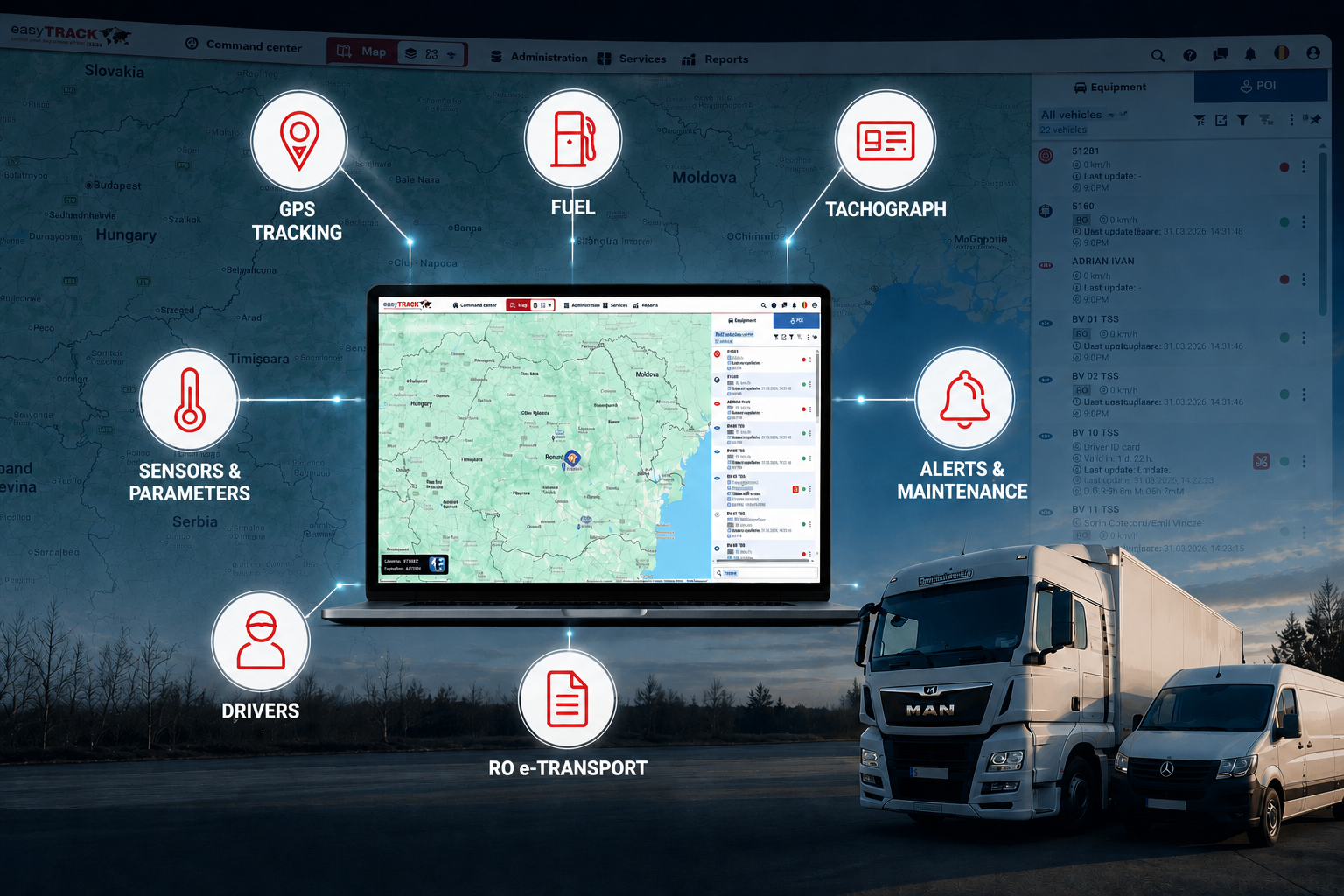
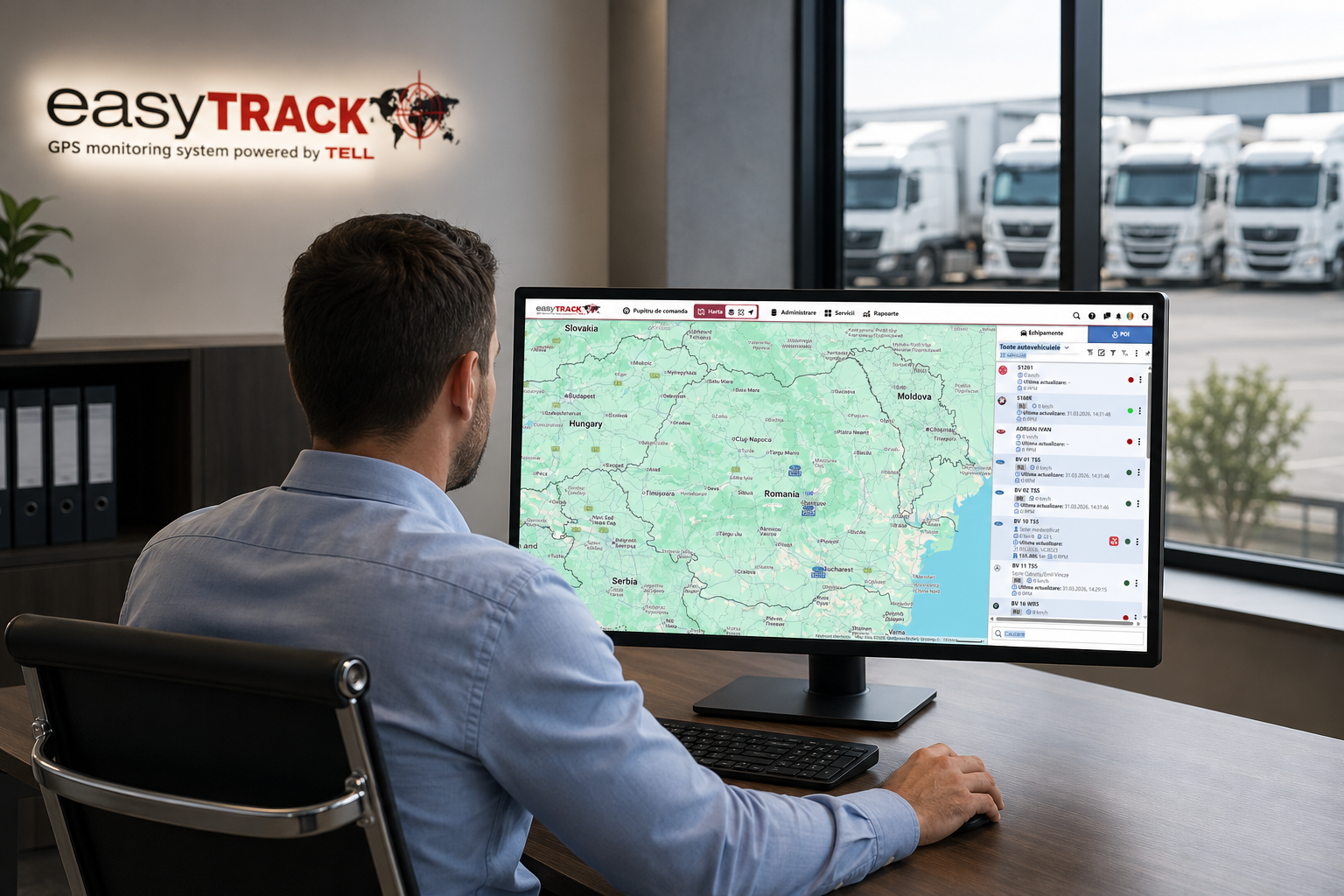
The easyTRACK platform enables fleet managers to monitor, in a single interface:
- Vehicle GPS locations;
- Completed routes;
- Distance travelled;
- Driver activity;
- Fuel consumption;
- Tachograph data;
- Alerts and key operational events.
By centralising this information, fleet operators gain a complete overview of vehicle activity and can better manage operating costs in a road charging system based on actual distance travelled.
Frequently Asked Questions
Will TollRo replace the road vignette?
Yes, for commercial freight vehicles with a Maximum Authorised Mass exceeding 3.5 tonnes.
Do passenger cars have to pay TollRo?
No. Passenger cars and other light vehicles will continue to use the road vignette system.
Does TollRo apply to international transport?
Yes. Any qualifying vehicle using Romanian roads covered by the TollRo system will be required to pay the applicable toll, regardless of whether it operates domestically or internationally.
Can TollRo be paid manually?
Yes. Romanian legislation allows both automated payment through authorised service providers and manual payment via route tickets for occasional journeys.
Conclusion
The introduction of TollRo represents one of the most significant changes to Romania’s road transport sector in recent years. Replacing a time-based road vignette with a distance-based charging system will fundamentally change how transport operators plan routes, estimate operating costs, and manage their fleets.
Companies that prepare early and implement modern fleet management solutions will be better positioned to adapt to the new requirements while maintaining full visibility over the costs generated by Romania’s new TollRo system.